CBD for dogs is not FDA-approved and should only be considered with veterinary guidance. The FDA has not approved cannabis or CBD products for any use in animals and cannot confirm their safety, effectiveness, quality or correct dosage.
CBD, or cannabidiol, differs from THC. CBD is generally not intoxicating, while THC can poison dogs and cause lethargy, loss of coordination, vomiting, tremors and other neurological signs.
Research discussed here includes a study of 51 dogs and a review of five studies involving 117 dogs. Last reviewed:
CBD for Dogs at a Glance
| Question | Short answer |
|---|---|
| Can dogs have CBD? | Sometimes, but only after discussing it with a veterinarian. |
| Is CBD FDA-approved for dogs? | No. The FDA has not approved CBD or cannabis products for veterinary use. |
| Can CBD help with pain or seizures? | Some studies suggest possible benefits, but the evidence remains limited. |
| Is THC safe for dogs? | No. THC exposure can cause poisoning. |
| Should you use a human CBD product? | No. Human products may contain THC, inaccurate CBD levels or contaminants. |
| Is there a standard CBD dose for dogs? | No universally established dose exists. A veterinarian should decide whether CBD is appropriate. |
What Might CBD Help Dogs With?
CBD may help some dogs with osteoarthritis pain or drug-resistant epilepsy, but the evidence is limited. It should be used only as an add-on treatment chosen with a veterinarian.
Osteoarthritis and Chronic Pain
Small clinical studies have reported improvements in pain, mobility or quality-of-life measures in some dogs with osteoarthritis. A systematic review of five studies involving 117 dogs found that every included study had a high risk of bias.
The review rated the certainty of the evidence as very low. Researchers cannot yet determine how reliably CBD improves arthritis pain in dogs.
CBD should not replace established arthritis care, including veterinary examination, weight management, exercise planning and prescribed pain medication.
Seizures
CBD may have a role as an add-on treatment for some dogs with difficult-to-control epilepsy. In a double-blind crossover study of 51 dogs, CBD reduced total seizures and seizure days compared with placebo at the study dose.
The study did not find a significant difference in the number of dogs that achieved at least a 50% reduction in seizures. Researchers also reported liver enzyme elevations, reduced appetite and vomiting.
CBD is not a substitute for prescribed anti-seizure medication. Stopping or reducing epilepsy medication without veterinary supervision can be dangerous.
What Are the Risks of CBD for Dogs?
CBD can cause side effects, interact with medicines and expose dogs to products with inaccurate labels or contaminants.
Drug Interactions
CBD can affect liver enzymes involved in drug metabolism. As a result, it may change how other medicines work or increase the risk of side effects.
Dogs taking seizure medication, sedatives, anti-inflammatory drugs or other long-term treatments need veterinary advice before receiving CBD.
Side Effects
Reported or possible side effects include:
- Sleepiness or sedation
- Increased appetite
- Vomiting
- Diarrhea or stomach upset
- Reduced appetite
- Loss of coordination
- Changes in liver enzyme levels
Clinical research in dogs has reported increases in alkaline phosphatase and other liver-related monitoring concerns. The risk may be greater with repeated use or when CBD is combined with other medicines.
Unreliable Product Quality
CBD products sold for pets are not evaluated in the same way as FDA-approved animal drugs. The FDA has reported concerns about inaccurate CBD amounts and possible contamination with pesticides, heavy metals and THC. Independent testing has also found substantial differences between labeled and measured CBD concentrations.
A product labeled "hemp" is not automatically THC-free or safe for dogs. Full-spectrum cannabis products may contain THC, and product labels may not accurately describe what is inside.
Should You Give Your Dog CBD Oil or CBD Treats?
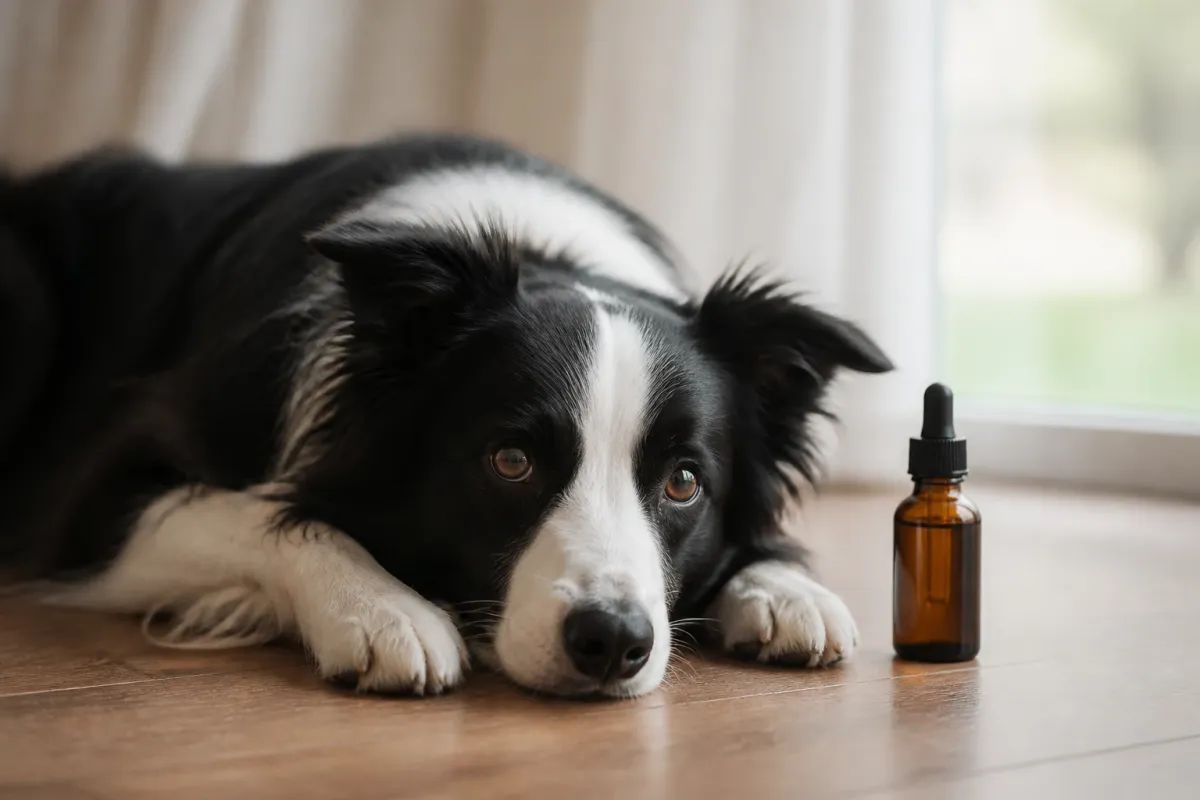
No. Speak with a veterinarian before giving your dog CBD oil, treats or capsules. Oils suit owners who need fine control over the amount, while hemp oil for dogs in a dropper bottle and [calming chews for stressful situations] each have a place depending on how your dog takes medicine.
A veterinarian can:
- Check whether pain, anxiety or seizures have another treatable cause.
- Review your dog's current medicines and medical history.
- Decide whether CBD is reasonable or whether a better-studied treatment is available.
- Select a product and monitoring plan if CBD is used.
- Monitor symptoms, appetite and liver-related bloodwork when appropriate.
If a veterinarian agrees that CBD is worth considering, ask about a pet-specific product with a batch-specific certificate of analysis. The report should identify the measured CBD amount and confirm that THC and relevant contaminants were tested.
Do not use a human gummy, edible or product containing THC.
There is no single evidence-based CBD dose for every dog. Published studies have used different formulations, concentrations, treatment periods and dosing schedules. Copying a dose from the internet could lead to underdosing, overdosing or an unsafe drug interaction.
What Should You Do If Your Dog Ate CBD or Cannabis?
Contact your veterinarian, an emergency animal hospital or an animal poison control center promptly, especially if the product may contain THC.
Seek urgent help if your dog shows:
- Extreme sleepiness or depression
- Difficulty walking or standing
- Heavy drooling
- Vomiting
- Agitation or unusual sensitivity
- Tremors
- Urinary accidents
- Seizures
- Breathing or cardiovascular problems
The FDA advises contacting a veterinarian, local emergency animal hospital or animal poison control center when a pet shows possible adverse effects after ingesting cannabis. The ASPCA Animal Poison Control Center can be reached at (888) 426-4435.
Bottom Line
CBD may have a limited role as an add-on treatment for some dogs with osteoarthritis pain or drug-resistant epilepsy. It is not FDA-approved for animals, has no universal dose and can interact with medicines or contain THC and contaminants.
Speak with a veterinarian before buying or giving any CBD product.