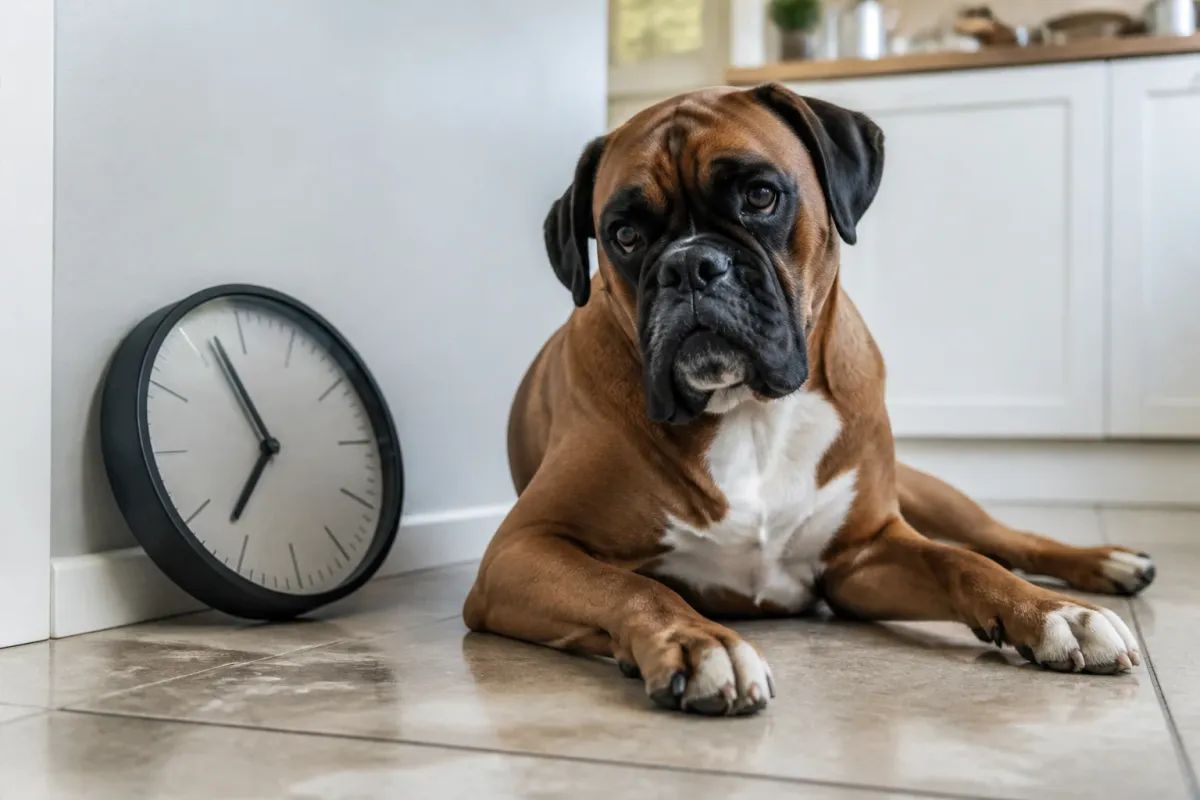
CBD's noticeable effects in dogs last several hours after a single oral dose, often about 4 to 8 hours. The exact duration varies by product, dose, food intake, metabolism, and whether your dog receives CBD regularly.
The time CBD remains in the bloodstream is not the same as the time your dog appears calmer or more comfortable. The cited studies were published in ****.
CBD Duration in Dogs at a Glance
| Question | Practical answer |
|---|---|
| How long might one dose feel effective? | Several hours, commonly estimated at about 4 to 8 hours |
| How long is CBD's half-life? | Approximately 2 to 5 hours in some single-dose oral studies, but longer with other formulations |
| Can CBD remain in the body after the effects fade? | Yes. CBD can remain measurable after noticeable effects have worn off |
| Does daily use change duration? | Yes. Repeated dosing can cause CBD to accumulate and lengthen its half-life |
| Should you give another dose when effects stop? | Only according to your veterinarian's instructions |
Why the Duration Varies
CBD products for dogs do not all behave the same way. Research has found that several factors can affect how long CBD remains in the body:
- Oil, chew, capsule, or another formulation
- Dose and concentration
- Whether CBD is given with food
- Single-dose use versus daily use
- Your dog's liver function and metabolism
- Other medications or supplements
- Whether the product contains THC or other cannabinoids
In one study of dogs given oral CBD oil, the terminal half-life was about 4 to 5 hours. Another study using different oral CBD formulations reported half-lives of about 2 to 3.3 hours. These findings show why one fixed duration does not apply to every CBD product.
How Long Does CBD Stay in a Dog's System?
CBD can remain measurable in a dog's body after its noticeable effects have ended.
A drug's half-life is the time needed for the amount in the body to fall by half. It does not show exactly how long your dog will feel the effects. As a general pharmacokinetic rule, most of a single dose may be eliminated after about four to five half-lives.
Based on the shorter half-lives reported in single-dose studies, one oral dose may be largely cleared within about one day. Some formulations can remain in the body longer.
Daily dosing produces a different result. In a 36-week study of dogs receiving CBD every day, the measured half-life increased from about 9 to 13 hours at the beginning of the study to about 25 to 31 hours after extended use. The researchers also found evidence that CBD accumulated over time.
This does not mean a dog remains visibly sedated or comfortable for 31 hours. It means measurable CBD may leave the body more slowly after repeated use.
When Should CBD Start Working?
Oral CBD often reaches its highest blood concentration about 2 hours after dosing, although some dogs reach peak levels later. Food, the oil base, and the delivery format can change absorption.
If your dog shows no improvement after a dose, do not automatically give more CBD. A higher dose can increase the risk of side effects without guaranteeing a better result.
What Can Make CBD Last Longer?
Daily dosing, food, product formulation, health conditions, and other substances can make CBD last longer.
CBD may remain in the body longer when:
- Your dog receives it every day.
- The product is highly concentrated.
- CBD is given with food that increases absorption.
- The formulation releases CBD slowly.
- Your dog has liver disease or takes medicines processed by the liver.
- The product contains THC or other cannabinoids.
CBD can affect how some drugs are metabolized. Tell your veterinarian about all medications, including seizure medicines, sedatives, pain medicines, allergy medicines, and supplements, before giving your dog CBD.
CBD Is Different From THC
CBD is not the same as THC. THC is the psychoactive cannabinoid associated with a "high" and can cause more obvious toxicity in dogs. Products marketed as hemp or CBD may contain inaccurate cannabinoid levels or unintended THC.
Possible signs of cannabis exposure in dogs include:
- Extreme sleepiness or depression
- Heavy drooling
- Vomiting
- Agitation
- Tremors
- Loss of coordination
- Convulsions
The U.S. Food and Drug Administration says cannabis has not been approved for use in animals. If your dog has an adverse reaction or may have ingested cannabis, contact a veterinarian, emergency animal hospital, or animal poison control center.
The Safest Practical Answer
Use the estimated duration as context, not as a dosing schedule. Published studies show that CBD's duration changes substantially between products and dosing patterns. If your vet approves a product, hemp calming chews for dogs with a labeled amount per chew make it easier to keep the timing and the dose consistent.
A veterinarian should guide CBD use if your dog takes other medication, has liver disease, is pregnant, has seizures, or may have eaten a product containing THC. The FDA has not approved CBD products for treating medical conditions in dogs, and product quality can vary.