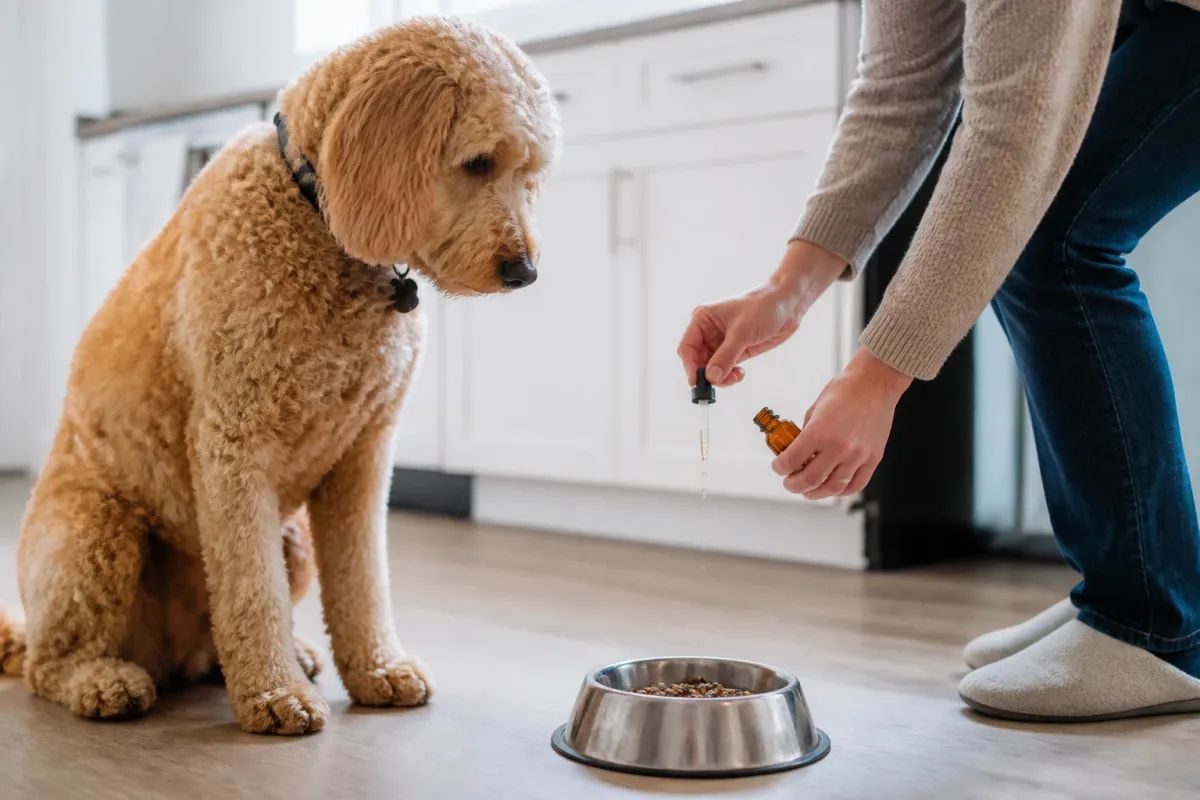
The onset time for oral CBD in dogs is about 1 to 5 hours. Studies measuring CBD in a dog's bloodstream have found peak concentrations between roughly 1.2 and 6.2 hours after oral dosing, depending on the product and the dog. A 2026 pilot study in five dogs also found that food substantially changed CBD exposure.
That timing does not guarantee a noticeable benefit. The FDA has not approved CBD for use in animals, and evidence that commercial CBD products reliably treat anxiety, pain, seizures, or other canine conditions remains limited.
CBD for Dogs: At-a-Glance Timing
| Question | Practical answer |
|---|---|
| When might oral CBD start working? | About 1 to 5 hours |
| When may blood levels peak? | Approximately 1.2 to 6.2 hours |
| How long can effects last? | CBD is short-acting, but effects may last up to about 24 hours in some dogs |
| Does food matter? | Yes. Food can substantially change how much CBD the dog absorbs |
| Should you give another dose if it seems ineffective? | No. Ask your veterinarian before changing the dose |
What Affects How Quickly CBD Works in a Dog?
Several things can change when the effects begin and how strong they seem:
- Product type: Oils, capsules, and soft chews may be absorbed differently.
- Dose and concentration: The amount listed on a product may not match its actual CBD content.
- Food: A 2026 pilot study of five dogs found that giving CBD with food greatly increased overall exposure compared with fasting. The study was small. It shows that food can change absorption, but it does not show that food makes CBD work faster.
- Body size and metabolism: Age, health, liver function, and individual metabolism can affect how a dog processes CBD.
- Other medications: CBD may interact with prescription medicines, including drugs processed by the liver.
- THC contamination: Products labeled "hemp" or "CBD" may contain THC or other unwanted substances. THC can be dangerous to dogs.
How Long Should You Wait Before Deciding Whether It Worked?
Give an oral CBD product several hours before deciding that it had no effect. Do not give an extra dose because your dog does not appear calmer or more comfortable after 30 to 60 minutes. Whichever of the dog anxiety relief products you are trialling you and your vet settle on, give it the full window above before judging whether it has helped.
If a veterinarian recommended CBD, follow the prescribed schedule and ask how long to wait before making any change. If you are using CBD instead of an established treatment for pain, seizures, or another medical problem, contact the veterinarian rather than relying on CBD alone.
What Side Effects Can CBD Cause in Dogs?
CBD can cause:
- Sleepiness or lethargy
- Unsteadiness when walking
- Drooling
- Vomiting or diarrhea
- Reduced appetite
- Agitation or changes in alertness
VCA Animal Hospitals lists lethargy, gastrointestinal upset, and unsteadiness as possible effects of CBD. The FDA also warns that cannabis-related exposures can cause more serious signs, including tremors and seizures.
Contact a veterinarian promptly if your dog becomes severely sleepy, cannot walk normally, vomits repeatedly, trembles, has a seizure, or may have consumed a product containing THC. For a suspected poisoning, contact your veterinarian, an emergency animal hospital, or an animal poison control service.
Is CBD Safe for Every Dog?
No. CBD is not automatically safe because it comes from a plant. The FDA says cannabis products have not been approved for any use in animals, and their safety, effectiveness, dosage, and product quality cannot be guaranteed. CBD may also affect how other medicines work.
Speak with a veterinarian before giving CBD to a dog that:
- Takes prescription medication
- Has liver disease
- Is pregnant or nursing
- Has a seizure disorder
- Is elderly or medically fragile
- Has unexplained anxiety, pain, vomiting, or behavior changes
Bottom Line
Wait several hours before judging an oral CBD dose, and do not change the dose without veterinary advice. A dog taking prescription medication or showing serious symptoms needs a veterinarian, not another dose of CBD.