
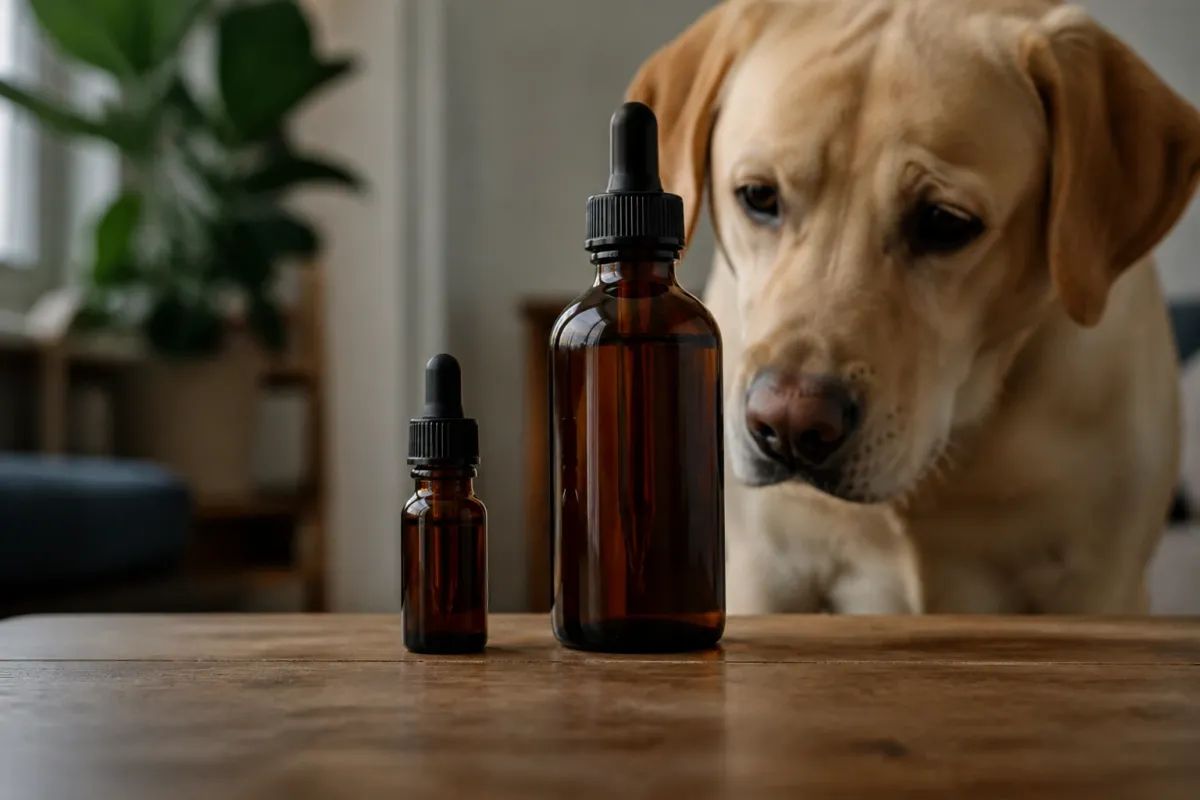
Human CBD oil is not automatically interchangeable with dog CBD oil. Both products may contain the same active compound, cannabidiol (CBD), but their concentrations, ingredients and testing can differ.
Five issues matter most: concentration, hidden THC, unsuitable ingredients, drug interactions and the lack of an established standard dose for dogs. The U.S. Food and Drug Administration has not approved cannabis or CBD products for use in animals, so their safety and effectiveness are not guaranteed.
**Reviewed: **
Human CBD Oil vs Dog CBD Oil
| Factor | Human CBD oil | Dog CBD oil |
|---|---|---|
| Main active ingredient | Usually CBD, but formulations vary | Usually CBD, but formulations vary |
| THC risk | May contain detectable THC | Should be tested for minimal or undetectable THC |
| Dose | Intended for humans, not dogs | Labeled for animals, but dosing is not universally standardized |
| Added ingredients | May contain flavourings, sweeteners or other ingredients that are unsafe for dogs | Usually formulated with dogs in mind, but products still vary |
| Regulation | Most over-the-counter CBD products are not FDA-approved medicines | No FDA-approved over-the-counter CBD product is approved to treat dogs |
| Veterinary suitability | A veterinarian should assess the product before use | Veterinary guidance is still needed, especially if the dog takes medication |
A "for dogs" label does not prove that a product works or is safe. It indicates that the product was marketed for animals and may have more suitable flavoring, concentration or dosing information.
Why Human CBD Oil Can Be Unsafe for Dogs
Human CBD Oil May Contain THC
THC is the intoxicating cannabis compound and the main toxic component in cannabis exposure among dogs. Products labeled "hemp" or "CBD" can still contain THC, especially full-spectrum products or products with inaccurate labels.
THC exposure can cause lethargy, depression, drooling, vomiting, agitation, tremors and, in serious cases, seizures.
Some Products Contain Xylitol or Other Unsafe Additives
Human CBD products, especially gummies, chews and flavored products, may contain ingredients that are dangerous to dogs. Xylitol is highly toxic to dogs. It can cause a rapid, life-threatening drop in blood sugar and liver damage.
Check every ingredient before giving a dog any human CBD gummy or edible.
Dogs Process CBD Differently From Humans
A dose that seems small for a person may be too much for a dog, particularly a small dog. CBD can also affect liver enzymes that help metabolise medicines. That creates a possible interaction with prescription drugs, including some medicines used for seizures, pain, anxiety or inflammation.
There is no universally established therapeutic CBD dose for dogs. Research has used different products, concentrations and dosing schedules. Do not transfer a dose from an internet article or a human product label directly to a dog.
Is Dog-Specific CBD Oil Better?
A dog-specific product is the more sensible option if a veterinarian recommends trying CBD, but the label does not mean the product is FDA-approved or proven effective.
Look for:
- A clear CBD amount in milligrams per millilitre
- A batch-specific certificate of analysis from an independent laboratory
- THC testing that shows no detectable or only legally minimal THC
- No xylitol, alcohol, artificial sweeteners or unnecessary stimulants
- Testing for heavy metals, pesticides, solvents and microbial contamination
- A complete ingredient list and lot number
Product quality varies. Cornell researchers found inconsistencies in the cannabinoid content of commercial pet CBD products, along with contamination concerns in some products. Dog-specific hemp oils formulated for dogs at least avoid the sweeteners and essential oils that make many human tinctures unsuitable.
Can a Dog Take the Same CBD Molecule as a Human?
Yes. CBD itself is the same chemical compound whether it is marketed for a person or a dog. The complete product may differ in:
- CBD concentration
- THC content
- Carrier oil and flavourings
- Additional ingredients
- Product testing
- The dose suitable for the individual dog
A veterinarian should assess the exact product instead of relying only on the words "CBD oil" on the label.
What Does the Evidence Say About CBD for Dogs?
Early research suggests that CBD may help with osteoarthritis discomfort, atopic dermatitis and seizure disorders. The evidence remains limited, and products used in studies may not be identical to products sold online or in pet shops.
Cornell reports that side effects in dogs have included sedation and increased appetite. CBD may also interact with other medicines.
CBD should not replace veterinary diagnosis or established treatment for pain, seizures, anxiety, cancer or another medical condition.
What Should You Do if Your Dog Has Already Taken Human CBD Oil?
Check the label immediately for:
- THC
- Xylitol
- Other sweeteners
- Alcohol
- Caffeine
- Additional medications or herbal ingredients
Contact your veterinarian if the product contains THC or xylitol, if the amount is unknown, or if your dog shows sleepiness, wobbliness, vomiting, excessive drooling, tremors, agitation or seizures. Suspected poisoning requires prompt veterinary or animal poison-control advice.
Bottom Line
Ask your veterinarian to review the exact bottle, ingredient list, CBD concentration and laboratory report before giving CBD to your dog.