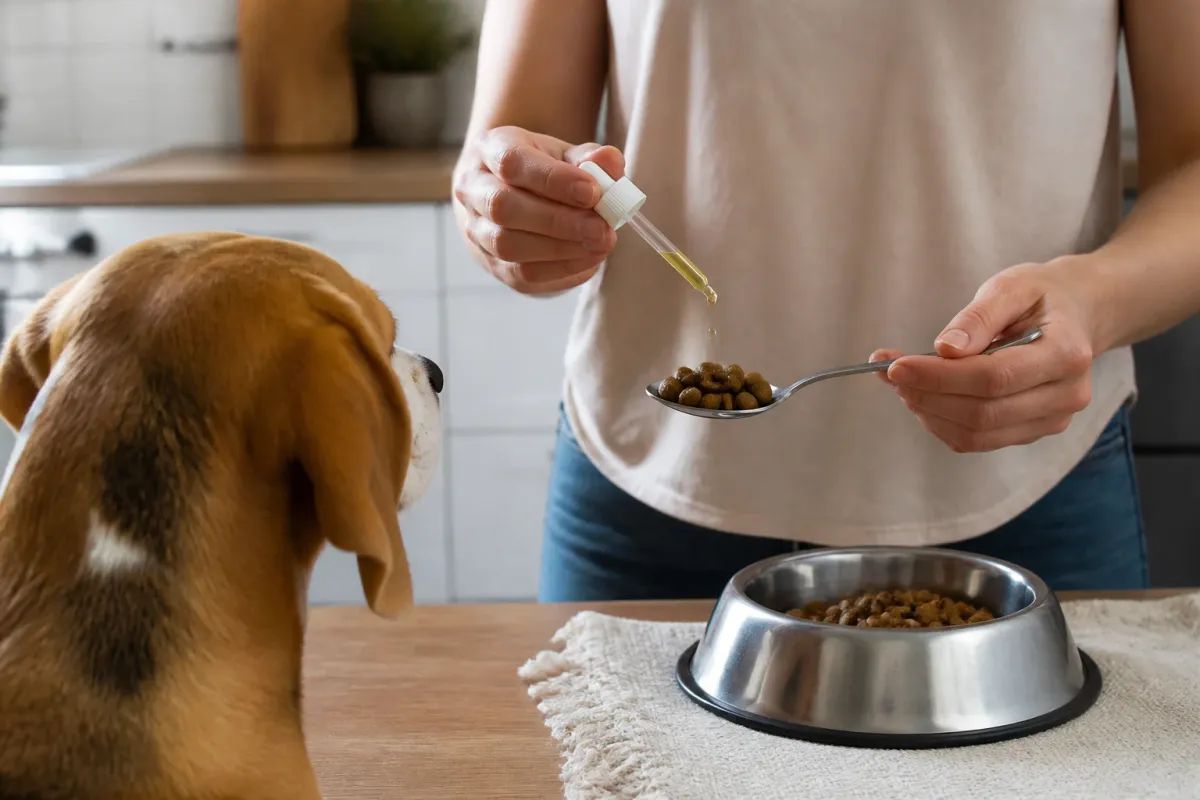
CBD oil for dogs is a product that should only be used after a veterinarian approves it. If your veterinarian approves a specific product and dose, give it by mouth with a measured syringe, either into the side of your dog's mouth or mixed into a small amount of food. Do not estimate the dose from your dog's weight or use a human CBD product without veterinary guidance.
The U.S. Food and Drug Administration has not approved cannabis or CBD products for any use in animals, so the safety, strength and effectiveness of products sold for pets cannot be guaranteed. VCA Animal Hospitals states that CBD effects may begin within 1 to 5 hours, although the timing varies by product and dog.
CBD Oil for Dogs at a Glance
| Question | Safe guidance |
|---|---|
| Should a veterinarian approve it? | Yes, especially if your dog takes medication or has liver disease, seizures or another chronic condition. |
| How is CBD oil given? | Usually by mouth, either directly or with a small amount of food, depending on the product. |
| How much should you give? | Use only the dose supplied by your veterinarian. There is no established home dose for every dog. |
| Which product should you use? | Choose a product with clearly stated CBD and THC amounts, batch testing and no xylitol or other harmful additives. |
| Which symptoms require help? | Severe sleepiness, poor coordination, tremors, repeated vomiting, agitation or seizures require prompt veterinary advice. |
How Should You Give CBD Oil to a Dog?
If your veterinarian has approved a specific product and dose:
- Check the label before every dose. Confirm the product name, CBD concentration and ingredients.
- Shake the bottle if the label says to do so.
- Measure the dose with an oral syringe. Do not estimate by counting drops because drop sizes vary.
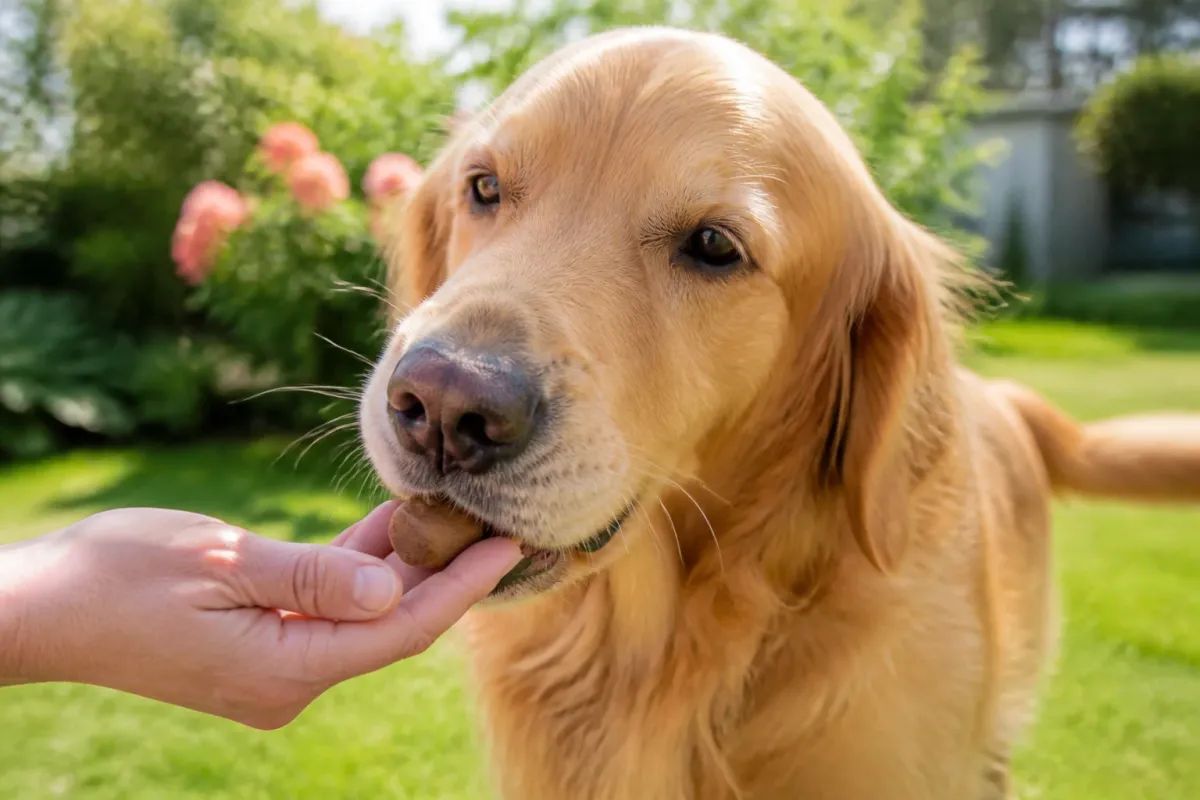
- Place the syringe into the side of your dog's mouth, between the cheek and gums. Dispense the oil slowly so your dog can swallow it.
- Mix the oil into a small amount of food if your veterinarian or the product instructions allow it. Use a small portion rather than the full meal so you know your dog received the entire dose.
- Record the time and amount given. A medication log can help you identify missed doses or possible side effects.
- Follow the veterinary schedule. Do not increase the dose because the first dose seems ineffective.
Some veterinary cannabidiol products are intended for oral use, application to the gums or topical use. Follow the instructions for the specific formulation rather than changing the route yourself.
How Do You Calculate the Amount of CBD Oil?
Use this calculation only after your veterinarian has supplied a dose in milligrams:
Volume in millilitres = prescribed CBD dose in milligrams ÷ product concentration in milligrams per millilitre
For example, if a veterinarian prescribes 10 mg and the bottle contains 20 mg/mL, the volume is 0.5 mL. This shows how to measure a prescribed dose. It does not recommend 10 mg for any particular dog.
Do not choose a dose from a generic online chart. Dog studies have used different products, concentrations, medical conditions and schedules. A research dose is not automatically suitable for home use.
Check whether the label gives the CBD amount:
- Per bottle
- Per serving
- Per chew
- Per millilitre
These amounts are not interchangeable. A 30 mL bottle containing 600 mg of CBD has a different concentration from a 30 mL bottle containing 300 mg.
Should CBD Oil Be Given With Food?
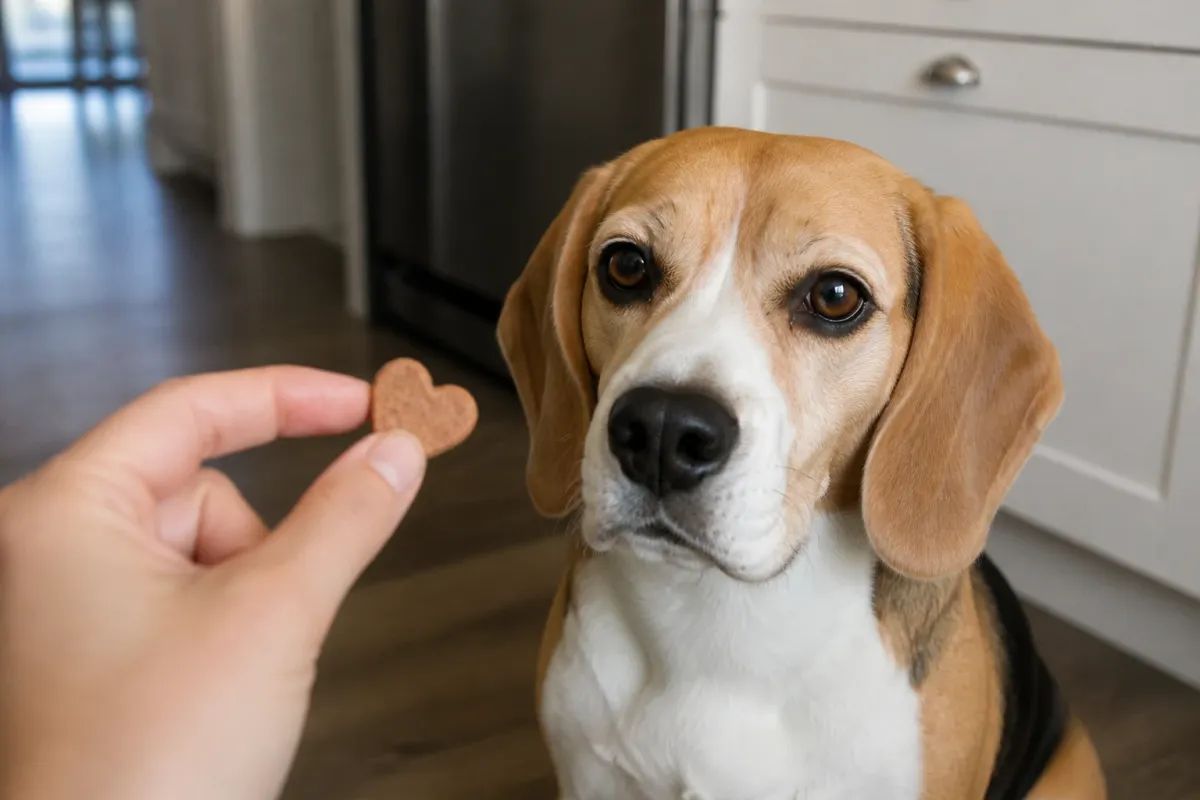
CBD oil can be given with food or on an empty stomach, depending on your veterinarian's instructions and the product formulation. A small amount of food may make administration easier and reduce stomach upset for some dogs. Dogs that refuse the dropper altogether often take hemp treats for fussy dogs more readily, with the trade-off that the amount per treat is fixed.
Do not mix the oil into a full bowl of food if your dog may leave some of the meal uneaten. Never mix it with a product containing xylitol. Xylitol is toxic to dogs and can cause low blood sugar, seizures, liver failure or death.
How Do You Choose a CBD Oil for a Dog?
Ask your veterinarian to help you choose the product. If CBD is considered appropriate, look for:
- A clearly stated CBD amount in milligrams per millilitre
- A complete ingredient list
- A stated THC amount, preferably with no measurable THC unless your veterinarian advises otherwise
- Independent laboratory testing for cannabinoid concentration and contaminants
- A batch-specific certificate of analysis
- No xylitol, chocolate, alcohol, essential oils or artificial sweeteners
- Packaging that is difficult for pets to open
"Hemp oil" does not necessarily mean the product contains CBD. Hemp seed oil and CBD oil are different products. A measured syringe and a clear mg per mL label are the two things to look for when you compare hemp oil for dogs with a syringe.
Avoid human gummies and flavored supplements. They may contain THC, xylitol or other ingredients that are unsafe for dogs. THC exposure can cause excessive sleepiness, unsteadiness, changes in heart rate or body temperature and unusual responses to sound or light.
What Dose of CBD Is Safe for Dogs?
There is no single proven dose that is safe and effective for every dog, condition and product. The appropriate amount depends on:
- Body weight and age
- The reason for treatment
- Liver and kidney health
- Other medications and supplements
- CBD concentration
- Whether the product contains THC or other cannabinoids
Research has tested specific protocols, but you should not copy them without veterinary supervision. One small osteoarthritis trial used CBD oil at 2 mg/kg every 12 hours. Epilepsy studies have tested different doses and produced mixed findings. A later review concluded that larger studies are needed before clear dosing recommendations can be made for canine epilepsy.
What Are the Possible Side Effects?
Possible side effects of CBD in dogs include:
- Sleepiness or lethargy
- Unsteadiness while walking
- Drooling
- Vomiting or diarrhea
- Increased appetite
- Changes in liver-related blood test results
CBD can affect how some medicines are processed. This matters especially for dogs taking seizure medication, sedatives, pain medication or other long-term treatments. Liver function may need monitoring during ongoing use.
Contact your veterinarian if your dog develops persistent vomiting, diarrhea, marked sedation, weakness, poor coordination, agitation or a change in appetite.
Seek urgent veterinary care for tremors, collapse, breathing problems or seizures. FDA guidance lists lethargy, depression, drooling, vomiting, agitation, tremors and convulsions among concerning signs after cannabis exposure.
What Should You Do if Your Dog Receives Too Much?
Call your veterinarian, an emergency animal hospital or a pet poison control service. Do not induce vomiting unless a veterinary professional tells you to do so.
In the United States, the FDA lists these pet poison control numbers:
- ASPCA Animal Poison Control Center: 888-426-4435
- Pet Poison Helpline: 855-764-7661
Keep the product container nearby and provide your dog's weight, the amount consumed and the time of exposure.
Bottom Line
If your veterinarian has not reviewed the product, dose and possible medication interactions, do not give CBD oil to your dog. If CBD is approved, follow the written instructions, measure each dose with an oral syringe and contact the clinic before changing the amount or schedule. CBD should not replace proven treatment for pain, seizures, anxiety or another medical condition without veterinary supervision.