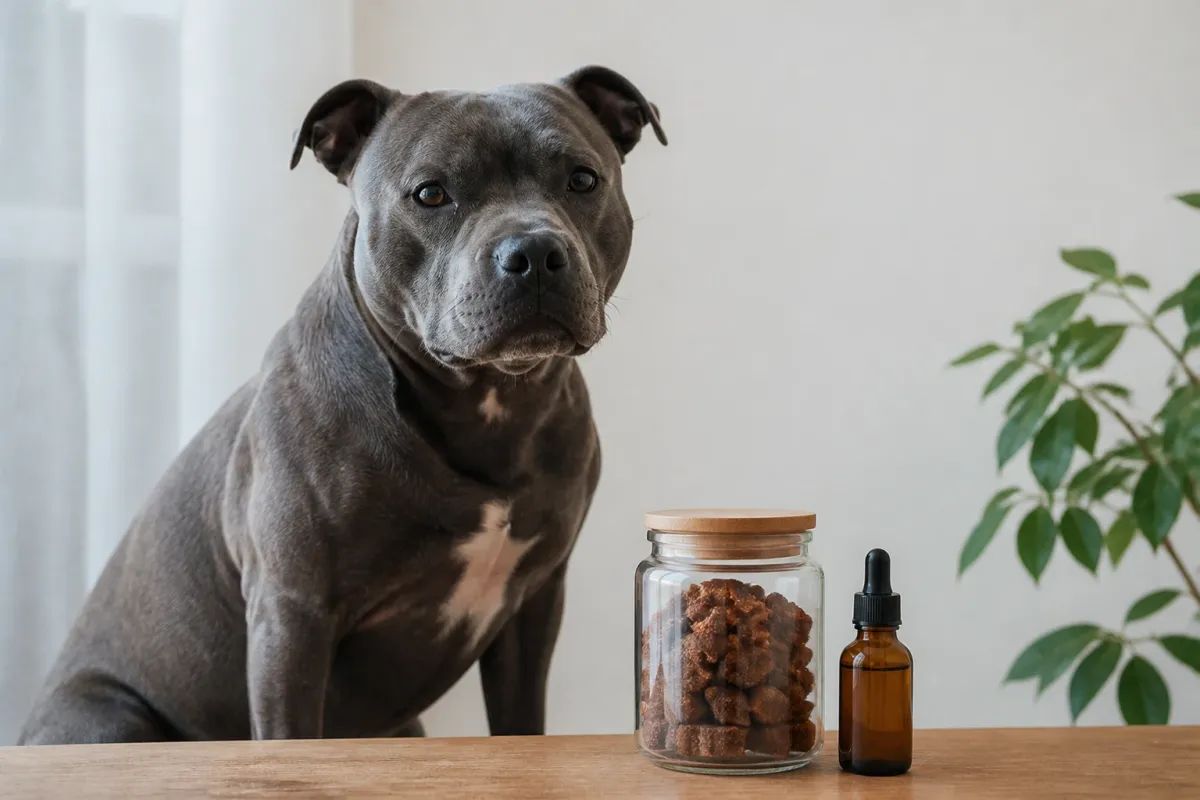
If your veterinarian approves CBD, ElleVet Sciences Calm & Comfort is the most evidence-aligned product-specific option for occasional anxiety linked to fireworks, travel or vet visits. A small Cornell pilot study evaluated the chews in 24 dogs with owner-reported anxiety, and 20 dogs showed fewer stress-related behaviors. Research from 2023, 2024 and 2025 has produced mixed results, though, and the Cornell study was not a large, blinded, placebo-controlled clinical trial. CBD should not be treated as a proven cure for canine anxiety.
For chronic separation anxiety, severe fear or sudden behavioral changes, a veterinary behavior plan and prescription treatment usually have stronger clinical support than CBD supplements.
Best CBD for Dogs With Anxiety at a Glance
| Option | Best use | Evidence and limitations |
|---|---|---|
| ElleVet Calm & Comfort | Occasional, predictable stress | Product-specific pilot data, but limited evidence and no FDA approval for anxiety |
| Veterinary-formulated CBD oil | Owners who need precise dosing | Oil can be easier to adjust, but quality varies between brands |
| CBD soft chews | Dogs that refuse liquid products | Convenient and palatable, but dose adjustments are less precise |
| FDA-approved anxiety medication | Severe, chronic or clinically diagnosed anxiety | Stronger regulatory and clinical support, but requires veterinary supervision |
Why ElleVet Calm & Comfort Is the Strongest Product-Specific Choice
ElleVet Calm & Comfort is one of the few canine CBD products with published, product-specific research involving dogs with owner-reported anxiety. The company-published Cornell pilot reported that 83% of dogs showed fewer stress or anxiety-related behaviors after receiving the chews before a trigger event.
The result needs context:
- The study involved only 24 dogs.
- It relied heavily on owner-reported behavior.
- It was not a large, randomized, placebo-controlled anxiety trial.
- It does not show that the product will work for every dog.
- ElleVet's research does not make the product FDA-approved.
The product's main advantage is its research record. That record is more relevant to canine anxiety than the evidence behind a random CBD oil bought online, but it does not prove that the chews treat anxiety.
What Does the Research Say About CBD for Canine Anxiety?
The research remains limited and mixed.
A 2023 review found that published anxiety studies in dogs were limited and produced inconsistent results. One study reported some improvement during separation and car travel, while other research did not find clear improvement across all anxiety-related measures.
A 2024 study of daily CBD use during repeated car travel found improvement in some stress measures, including whining, lip licking and certain behavioral ratings. The researchers still called for more studies because CBD did not improve every measure consistently.
A 2025 blinded crossover study found a mild stress-reducing effect from a treat containing CBD, L-tryptophan and alpha-casozepine during car travel. CBD-only treatments did not produce broad, consistent improvement across the measured outcomes.
Cornell's veterinary guidance is cautious. There is anecdotal support for CBD in dogs with anxiety, but no published double-blind, placebo-controlled clinical anxiety study has established CBD as a reliable treatment.
How to Choose a Safer CBD Product for a Dog
If your veterinarian agrees that a CBD trial is reasonable, look for the following:
An exact CBD amount on the label. The label should state the milligrams of CBD per milliliter, capsule or chew. "Hemp oil" alone does not show how much cannabidiol the product contains.
A current, batch-specific certificate of analysis. The report should confirm cannabinoid concentrations and test for THC, heavy metals, pesticides, microbes and residual solvents. Cornell research found substantial quality variation among over-the-counter pet hemp products, including heavy-metal contamination and products that did not match their label claims.
Non-detectable or clearly disclosed THC. Do not assume that a hemp-derived product contains no THC. Dogs can develop serious adverse effects after cannabis exposure. The FDA lists lethargy, depression, drooling, vomiting, agitation, tremors and convulsions among possible signs of cannabis toxicity in pets.
A formula made for dogs. Avoid human CBD gummies, products with unknown ingredients and anything that contains ingredients unsafe for dogs.
Formal quality controls. The NASC Quality Seal indicates that a company has passed an independent audit, maintains quality procedures, operates an adverse-event reporting system and participates in independent product testing. The seal supports manufacturing quality, but it does not show that CBD treats anxiety.
Veterinary review of the ingredients and medication history. FDA information warns that CBD can interact with other medications. Veterinary review matters most when a dog takes seizure medication, sedatives, pain medication or drugs processed by the liver.
Is CBD Oil or a CBD Chew Better for Anxiety?
CBD oil is generally the better format when precise administration matters. Liquid products allow a veterinarian to adjust the amount gradually and may be more practical for very small dogs.
CBD chews are more convenient when palatability is the main concern. They can suit predictable events, but the fixed amount per chew makes fine adjustments harder. ElleVet describes its oils as useful for precise administration and its chews as convenient for dogs that readily accept treats.
There is no universally established therapeutic CBD dose for canine anxiety. Research studies have used different products, concentrations and dosing schedules, while Cornell notes that product quality and labeled cannabinoid amounts can vary. Do not copy a generic internet dose without veterinary guidance. If a chew suits your dog best, compare calming chews for dogs with anxiety at home on the amount per chew and the ingredient list before settling on one.
When CBD Is Not the Best Treatment
CBD should not replace veterinary assessment when anxiety is severe, persistent or newly developed.
A dog with chronic separation anxiety may need:
- Gradual desensitization to departures
- Positive-reinforcement behavior modification
- Environmental management
- A daily medication
- A short-acting medication for predictable triggers
Cornell states that behavior modification is critical and recommends veterinary assessment instead of relying on an over-the-counter supplement alone.
As of September 25, 2026, FDA-approved veterinary options include fluoxetine and clomipramine for canine separation anxiety when used with a behavior modification program. The FDA also approved Tessie, containing tasipimidine, on May 6, 2026, for noise aversion and separation anxiety in dogs.
Bottom Line
For occasional, predictable anxiety, discuss ElleVet Calm & Comfort with your veterinarian if you are considering a CBD trial. Confirm the current batch certificate of analysis, check the THC result and follow the product instructions your veterinarian approves. Owners who prefer a simpler format can also look at popular calming treats for dogs and discuss them with their vet.
Stop using the product and contact a veterinarian if your dog develops vomiting, extreme sleepiness, wobbliness, agitation, tremors or seizures. Severe or ongoing anxiety calls for a behavior plan and, when appropriate, an approved medication rather than CBD alone.